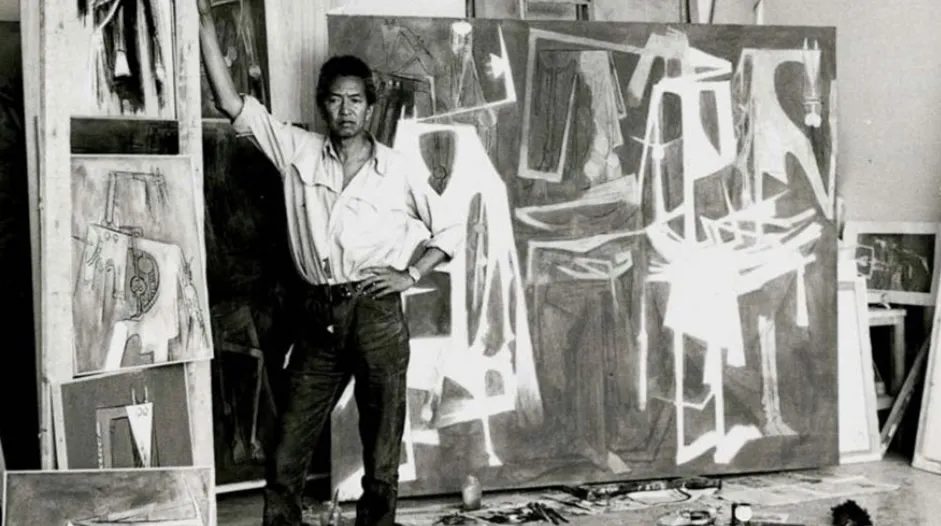
Wifredo Lam (1902–1982), born Wifredo Óscar de la Concepción Lam y Castilla in Sagua la Grande, Cuba, stands as one of the most visionary artists of the 20th century, renowned for synthesizing European modernism with Afro-Cuban spirituality and creating a powerful anti-colonial aesthetic that bridged Cubism, Surrealism, and non-Western traditions.
Of mixed Chinese, African, and Spanish heritage, Lam grew up immersed in Santería rituals through his godmother, a priestess, shaping his lifelong engagement with hybrid mythologies. After studying at Havana's Academia de San Alejandro, he moved to Madrid in 1923 for academic training, then to Paris in 1938, where Pablo Picasso—calling him a "lost cousin"—introduced him to the avant-garde circle including Matisse, Miró, and André Breton. Fighting briefly in the Spanish Civil War and fleeing Nazi-occupied Paris via Marseille, Lam returned to Cuba in 1941 amid World War II.
This homecoming proved transformative: confronted with colonial exploitation and Afro-Cuban cultural vitality, he forged his mature style. Rejecting purely European modernism, Lam infused Cubist fragmentation and Surrealist dream-logic with Santería iconography, hybrid human-animal-plant figures, and tropical symbolism to evoke the spiritual energy of Black Cuba and critique racial hierarchies. His 1943 masterpiece The Jungle (La Jungla)—a monumental gouache depicting mask-like beings emerging from sugarcane—epitomizes this fusion, challenging primitivist appropriations and asserting Afro-diasporic presence in global modernism.
Lam's work anticipated decolonizing impulses in art, influencing later generations and movements like Négritude. Active in Surrealism yet independent, he also produced ceramics, prints, and sculptures. His legacy endures in major collections worldwide and the Havana Centro de Arte Contemporáneo Wifredo Lam. Through radical cultural synthesis, Lam redefined modernism as truly global and inclusive.
